What we actually automate first
Automation projects fail when they start with the technology. They succeed when they start with the task everyone dreads doing.

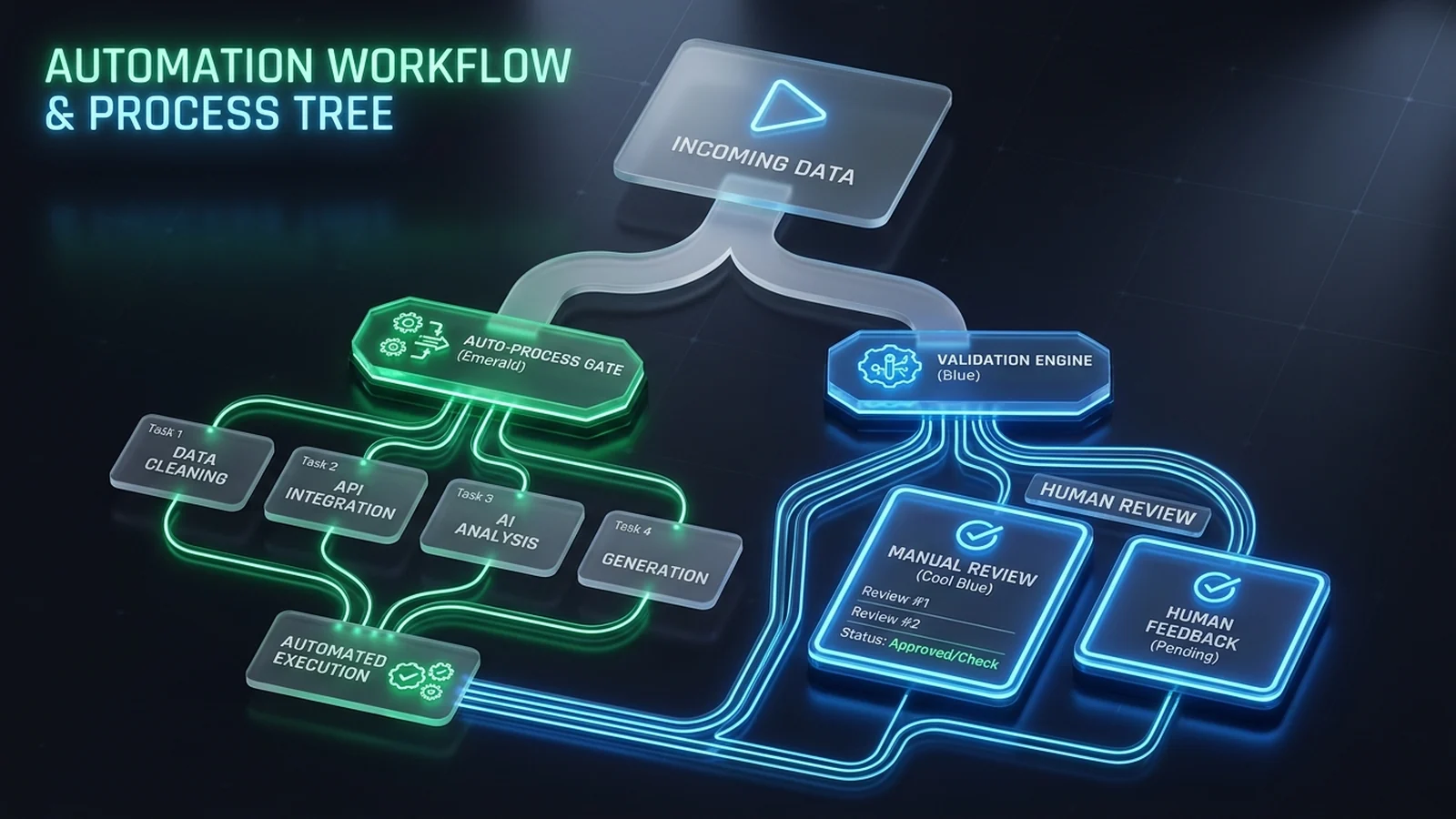
The question is never "what can AI do". It is "what is your team doing forty times a week that a rule could handle".
The three good first candidates
A task is a good automation candidate when it is frequent, rule-based, and already written down somewhere.
- Inbound qualification — sorting enquiries before a human reads them
- Recurring status updates — the same summary, rebuilt by hand every week
- Data entry between two systems that should already talk
A documented example
For one client, roughly 70% of inbound inquiries were handled without a person touching them. Not because the automation was clever — because the inquiries were genuinely repetitive and the routing rules already existed informally.
What to leave alone
- Anything a customer would be upset to discover was automated
- Decisions with legal or financial consequences
- Processes that change shape every month
The goal is not fewer people. It is that the people you have stop doing work a rule could do.
Keep reading
Related articles

AI Powered Social Media Marketing and Automation in 2026: The Practical Playbook
The era of generic ChatGPT captions and spam schedulers is over. Here is how modern brands run autonomous trend listening, multimodal creative sprints, and 24/7 conversational pipelines in 2026.
Read article
Your CPA isn't rising because of the auction
When cost per acquisition climbs, the instinct is to blame competition or the algorithm. Usually the cause is closer to home — and it is cheaper to fix than a bigger budget.
Read article
The handoff is where your leads die
Most funnels do not fail at the top. They fail in the gap between someone raising their hand and someone actually calling them back.
Read article